
Arrest Warrants in Eddy County
An arrest warrant lets an officer arrest a named defendant. It rests on probable cause and the offense written in the warrant. Which court issues it in Eddy County depends on the charge. District Court takes felonies. Magistrate Courts cover limited criminal and traffic matters, and Municipal Courts handle city offenses. New Mexico's public forms lay out this structure, but the Sheriff publishes no warrant roster you can browse. Run a Case Lookup to find the court, then call that clerk for current status, bond, appearance, or surrender instructions.
The Fifth District Probable-Cause Route
District Rule 5-208 lets a judge issue a warrant on an indictment or on sworn facts that establish probable cause. When a complaint needs that sworn basis, Form 9-209 records the affiant along with the date, place, offense, and supporting facts. Form 9-210 comes next. It names the court, the case, the defendant, the offense, and where the warrant may be executed, then adds the judge's action, the command itself, the information-system destination, and return or removal details. Think of it as paperwork that explains how a warrant gets built, not a live Eddy County case lookup. Public access to any real filing can still be limited by sealed material, investigative facts, or protected personal information. For the blank forms themselves, the criminal-form index is the official source, and it shows each field as the courts publish it.
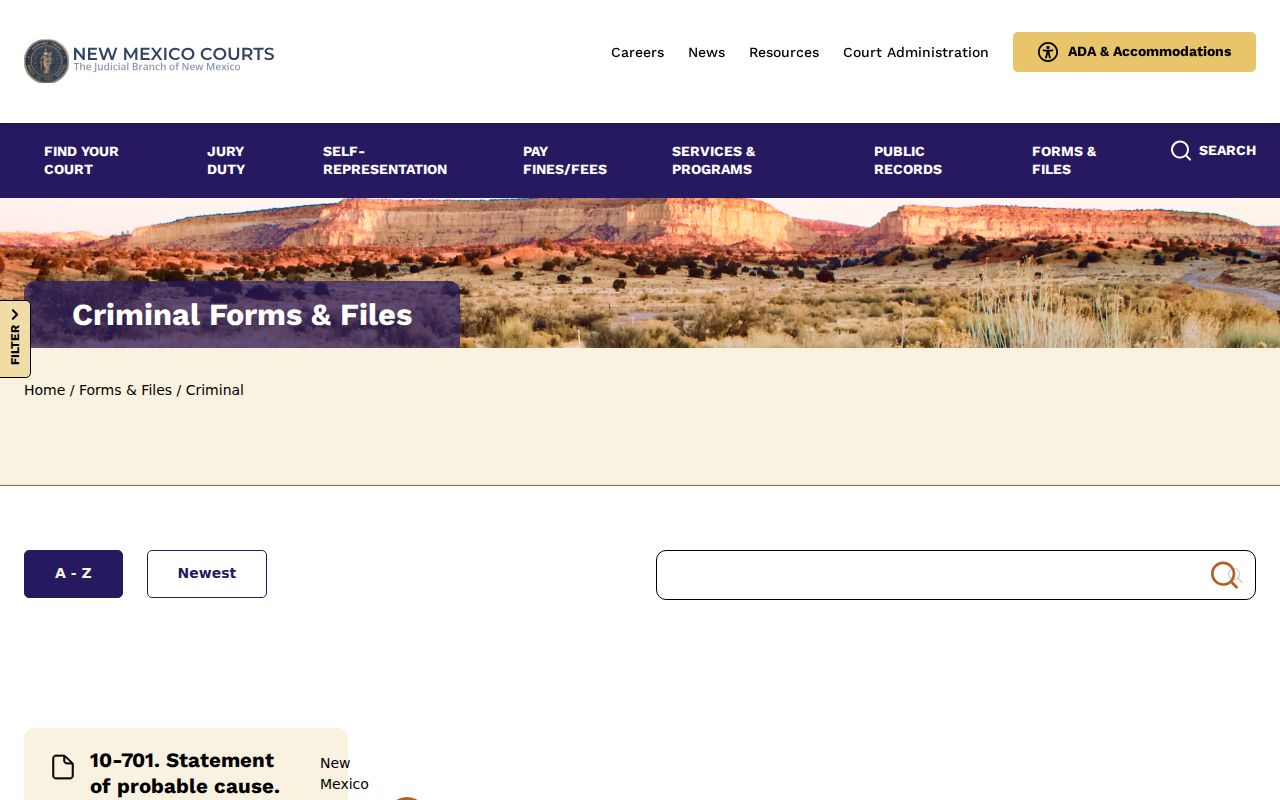
Blank forms show the fields without exposing a person’s warrant record.
What an Eddy County Arrest Warrant Contains
Form 9-210 offers the clearest field list for explaining an Eddy County arrest warrant publicly. It carries the court, the county or city, the case number, the defendant, the probable-cause or offense description, and the statute or ordinance charged. Execution jurisdiction, the judge and date, the command to arrest, the information-system destination, and return or removal details round it out. A supporting affidavit adds the sworn facts and the affiant.
| Case identity | Court, case number, county or city, and the offense category. |
|---|---|
| Probable cause | The offense and facts supporting the warrant, with public access possibly limited. |
| Execution | Authorized officers, geographic jurisdiction, system entry, command, and return. |
| Disposition | Service, surrender, cancellation, removal, or another court-entered event. |
What Form 9-210 Actually Means
The form splits the reason for an arrest from what happens later, at service and return. It is not a bond schedule, a jail roster, or a full public status page. An Eddy County warrant can direct an authorized officer to bring the defendant before the proper court, while bond and release conditions come from the court's order and the case rules instead. Some fields rarely reach public view. Addresses, Social Security numbers, juvenile material, sealed records, and active investigative facts may all stay out of what a searcher can see. So treat this schema as a map of what a clerk may reference, not a promise that every field appears online.
Record boundary: A blank official form explains structure; only the court can confirm the current status of a specific arrest warrant.
How Eddy County Arrest Warrants Are Served
Rule 6-206 reaches wider than the idea that the Sheriff serves every warrant. Depending on the court and the command, an Eddy County Sheriff deputy, a Carlsbad, Artesia, or Loving police officer, a New Mexico state officer, a tribal or campus officer, or another authorized agency may execute it. The issuing court's jurisdiction and its information-system instructions control the process.
Eddy County Sheriff
1502 Corrales Drive, Carlsbad
575-887-7551
Artesia Police
3300 W Main, Artesia
575-746-5000
Loving Police
415 W Cedar, Loving
575-745-3511
Who May Execute an Eddy Arrest Warrant
New Mexico rules let full-time salaried officers across state, county, municipal, campus, tribal, and Pueblo agencies execute a warrant inside their command's jurisdiction. That grants power to act. It does not make any one office the public status keeper for Eddy County. A service return may sit with law enforcement. The issuing court, though, keeps the case and its disposition. The county Patrol page lists patrol and service duties but posts no dedicated warrant phone line. So call the court first about a possible warrant, then the Sheriff Records Department about an existing Eddy County document. The official arrest-warrant page displays a blank local form, not a record naming any subject.
Keep service questions and court-status questions routed to the office that maintains each record.
Arrest Warrant Versus Summons and Bench Warrant
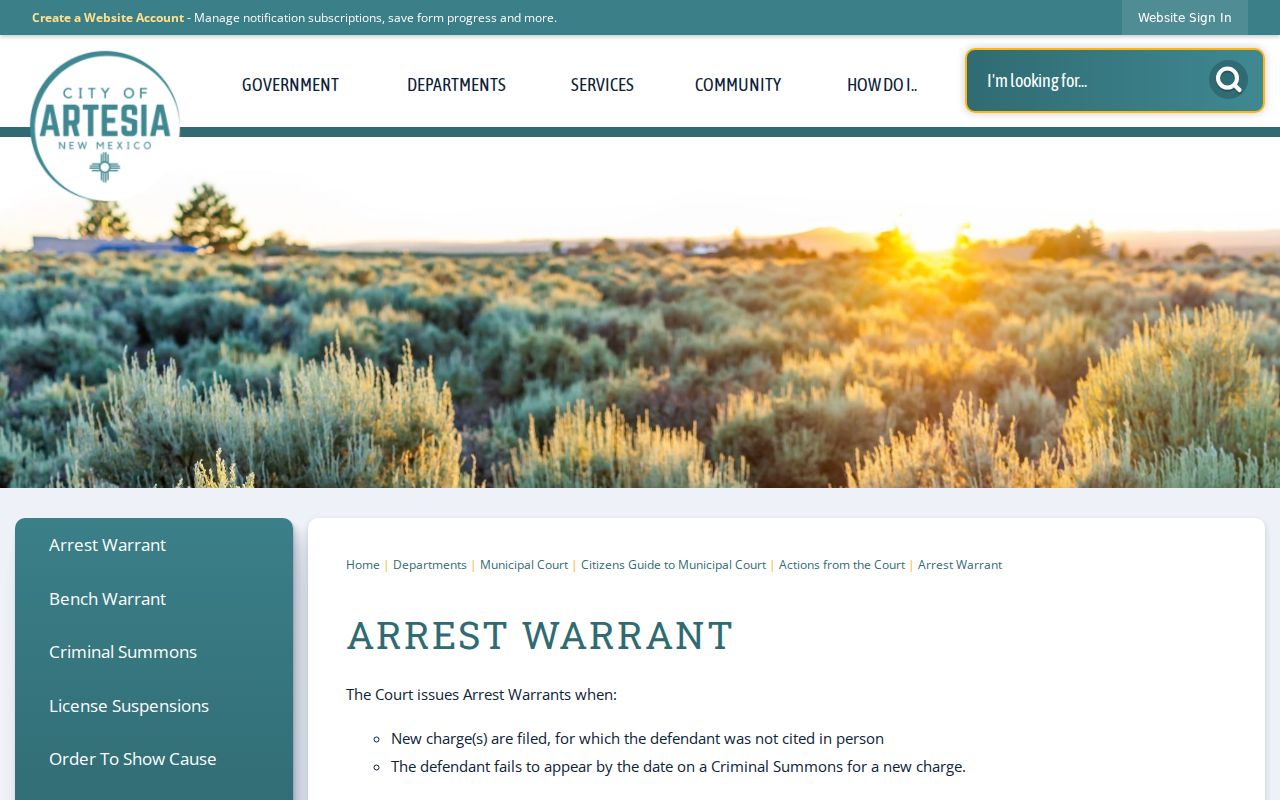
These documents do different jobs. A summons orders a person to appear, and in a municipal case it may come before any warrant. A bench warrant answers a missed appearance or another failure inside an existing case. An arrest warrant rests on probable cause for an offense. Artesia's official court pages lay these out as separate steps, with a possible MVD notice in the mix, and the same distinctions apply across Eddy County.
| Process | What it does | Local question |
|---|---|---|
| Summons | Orders an appearance. | When and where must the person appear? |
| Bench warrant | Responds to nonappearance or noncompliance. | What court action recalls or resolves it? |
| Arrest warrant | Authorizes arrest based on probable cause. | Which court issued it and what are bond instructions? |
Artesia’s Summons-to-Warrant Sequence
Artesia publishes separate Arrest Warrant, Bench Warrant, Actions from the Court, and Subpoena pages, and the city spells out the sequence. An arrest warrant can follow a new charge when the person was not cited in person or fails to appear on a criminal summons. A bench warrant can follow failure to pay, failure to appear, failure to comply, or a subpoena nonappearance. That chain is city-specific. Do not carry it over to a Magistrate case in Eddy County. For a city matter, call Artesia Municipal Court at 575-746-2122 or the payment/help number at 575-746-9401. For a state misdemeanor, DWI, traffic, or preliminary-hearing matter, use Artesia Magistrate at 575-746-2481.
What to Do If You Think You Have an Arrest Warrant
Start with Case Lookup to find the court and case. Then call the clerk with the legal name, date of birth, case number, and paperwork in hand. Ask about counsel, a motion, a scheduled appearance, bond, and the surrender procedure. Do not lean on an unofficial list, and do not use Crime Stoppers to work out a personal court matter or dodge service. For an Eddy County warrant question, the clerk is the right call.
Get advice first: A lawyer can help evaluate the charge, probable-cause process, bond, and safest lawful way to address the court.
Sealed Investigative Materials and Public Access
Not every record opens on request. IPRA and the court-access rules carve out exceptions, so sealed files, juvenile cases, and domestic-violence protection material often stay closed or arrive redacted. The same goes for confidential sources, addresses, Social Security numbers, and details tied to an active investigation. The New Mexico public-access guide adds one more limit: its basic Case Lookup does not provide court documents. For a county law-enforcement record, Eddy County Records handles requests through the NextRequest route. Warrant status is a separate matter. That question, and any path to resolving it, belongs to the issuing court, a different office handling a different request.
Verify the source: An online case lead can locate a court, but it does not replace the court’s official answer.